
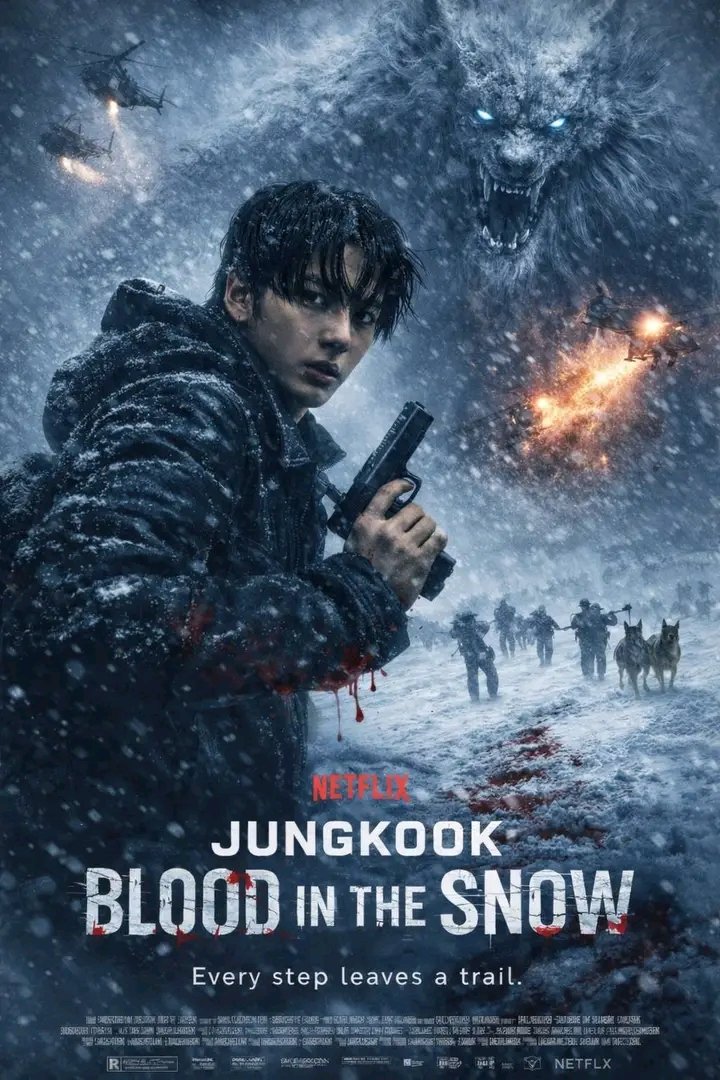
In a narrative that feels as cinematic as it is haunting, JUNGKOOK: Blood in the Snow emerges as a chilling metaphor for survival, resilience, and the psychological cost of endurance in hostile environments. Framed like a breaking-news feature yet told with poetic intensity, the story unfolds in a frozen landscape where beauty and brutality coexist — and where survival is never guaranteed.
The snow-covered setting is more than a backdrop; it is a character in itself. Endless sheets of white stretch across the horizon, pristine and silent, yet hiding dangers beneath their calm surface. In this icy wilderness, Jungkook is portrayed not simply as a figure moving through the storm, but as a symbol of human will — a lone presence against a merciless environment that tests both body and mind.
Witnesses within the narrative describe the scene as “unnaturally quiet,” the kind of silence that follows chaos. Footprints in the snow tell a fragmented story: struggle, pursuit, and escape. Blood stains the ice in stark contrast to the pale landscape, creating a visual that is both shocking and symbolic — life and vulnerability exposed against the cold indifference of nature.
According to the fictional report’s timeline, the events began under routine conditions, with no signs of immediate danger. But as night fell and temperatures dropped, circumstances changed rapidly. What began as a journey of endurance transformed into a fight for survival. Sources within the story suggest that Jungkook faced multiple threats — not only from the environment, but from unseen forces that turned the frozen terrain into a battlefield.
Analysts within the narrative frame the incident as a story of psychological resilience as much as physical survival. Hypothermia, exhaustion, and isolation are presented as enemies just as real as any visible threat. The ice becomes a metaphor for emotional numbness, while the blood represents humanity — warmth, fear, pain, and life itself — fighting to remain present in a world that tries to erase it.
“This isn’t just about survival,” one fictional commentator notes. “It’s about identity under pressure. Who are you when everything familiar is stripped away, and all that’s left is instinct?”
What makes Blood in the Snow compelling is its dual tone: it reads like a news report, but feels like a legend in the making. The language of journalism — timelines, witnesses, analysis — collides with the imagery of myth and symbolism. Jungkook is not only a person in the story; he becomes an emblem of endurance, representing anyone who has faced overwhelming odds and refused to disappear.
By dawn, the storm clears, and the ice reflects the pale winter sun. The blood-stained snow remains as silent evidence of what occurred — a reminder that survival always leaves marks. The landscape looks calm again, but it has been changed, just as Jungkook has been changed by the experience.
JUNGKOOK: Blood in the Snow — When Survival Stains the Ice ultimately reads as a powerful allegory: survival is never clean, never silent, and never without cost. It leaves behind traces — in the land, in the body, and in the mind. And in that frozen silence, the story lingers, asking one question that resonates far beyond the snow:
What does it truly mean to survive?