
For too long, women’s sports have been framed through a lens of caution—as if they need protection rather than respect. That mindset is not only outdated, it’s holding the game back.
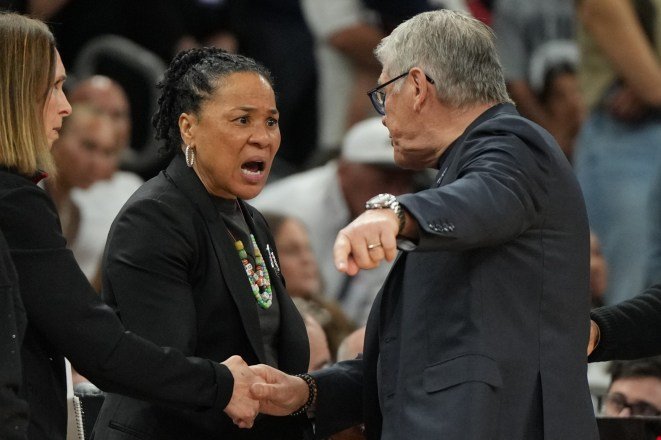
Across the country, programs like South Carolina Gamecocks women’s basketball under Dawn Staley have proven that women’s sports are thriving at the highest level. Packed arenas, national TV audiences, and elite competition have become the norm—not the exception. Yet, the conversation around women’s athletics still too often leans toward limitations instead of possibilities.
The truth is simple: women’s sports don’t need to be handled delicately—they need to be covered, critiqued, and celebrated with the same intensity as men’s sports. That means real analysis, honest debate, and yes, even criticism when it’s warranted. Equality isn’t just about praise; it’s about treating the product on the court as worthy of serious attention.
Look no further than the rise of stars like Caitlin Clark, who have transformed the visibility of the game. Her performances didn’t just draw fans—they demanded respect. And with that spotlight came scrutiny, expectations, and pressure—the very elements that define top-tier sports.
Media coverage plays a major role in shaping perception. When women’s games are framed as feel-good stories rather than high-stakes competition, it subtly undermines the athletes. These players are not participating for sympathy—they are competing to win.
There’s also a growing business case. Sponsorships, NIL deals, and broadcasting rights are expanding rapidly, signaling that women’s sports are not just culturally relevant—they’re economically powerful. Treating them as fragile ignores the reality of a fast-growing industry driven by talent, passion, and demand.
The path forward is clear: elevate the standard. Cover women’s sports with the same urgency, break down performances with the same depth, and hold programs accountable with the same expectations.
Because the moment we stop treating women’s sports like they’re fragile is the moment we start treating them like what they truly are—elite competition at its highest level.